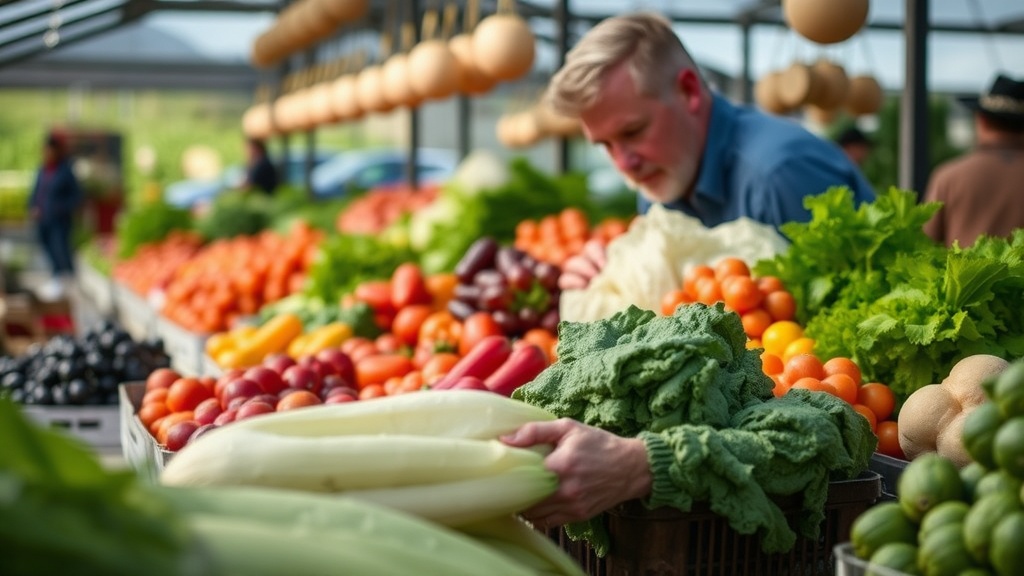
Picking the Best Local Seasonal Produce in Chambly

Most people think that buying local produce in the Montérégie region means settling for a limited selection or paying a massive premium. That's a mistake. When you know how to shop the seasonal cycles of the South Shore, you actually get better quality and more flavor than you'll find in a standard supermarket aisle. This guide breaks down exactly how to identify peak produce, where to find the best harvests near Chambly, and how to judge quality at the farm stand level.
How Do I Know Which Fruits and Vegetables Are in Season in Quebec?
The best way to know what's in season is to follow the natural progression of the Quebec growing seasons, which moves from hardy greens in spring to heavy crops in late summer and root vegetables in autumn. You can't force a strawberry to taste good in April—it just isn't happening without massive greenhouse intervention. Instead, watch the local markets. If you see a sudden influx of corn, it's time to pivot your shopping habits.
In our part of the world, the season follows a fairly predictable rhythm. Early spring is all about what can survive a frost, like radishes and certain greens. Summer is the heavy hitter for stone fruits and berries. Fall brings the heavy hitters like pumpkins and squash. It's a rhythm that defines our local food culture.
To get a technical look at our growing cycles, you can check the official MAPAQ website (Ministère de l'Agriculture, des Pêcheries et de l'Alimentation) for agricultural data. They track everything from crop yields to seasonal availability across the province. It's a great way to see what's happening on a macro level before you even head out to a farm stand.
Here is a quick breakdown of the seasonal timeline for the Montérégie region:
- Late Spring (May-June): Asparagus, green onions, and early leafy greens.
- Summer (July-August): Strawberries, blueberries, tomatoes, cucumbers, corn, and zucchini.
- Early Fall (September): Peaches, apples, and various heirloom vegetables.
- Late Fall (October-November): Pumpkins, squash, potatoes, and hardy root vegetables.
What Should I Look For When Buying Produce at a Farm Stand?
You should look for vibrant color, firm texture, and a lack of bruising or soft spots when selecting produce at a local stand. Don't be afraid to pick up a vegetable to feel its weight and density. A heavy tomato usually means more juice; a light one might be pithy or underripe.
When you're at a stand near the Chambly Canal or a local roadside market, the rules are different than at a big-box store. You aren't looking at a polished, wax-coated version of nature. You're looking at the real thing. Sometimes that means a bit of dirt on a carrot or a slightly uneven shape on a bell pepper. That's fine. In fact, it's usually a sign that it hasn't been over-processed.
If you're trying to build a truly local shopping routine in Chambly, you need to train your eyes. Stop looking for the "perfect" looking cucumber. Start looking for the one that feels heavy and has tight, unbroken skin. That's the one that's going to taste better in your salad.
The "Hand Test" for Common Produce
I've spent plenty of time at local markets, and I've learned that a little bit of tactile testing goes a long way. Here is how I judge the staples:
| Produce Item | What to Look For | What to Avoid |
|---|---|---|
| Tomatoes | Deep color, heavy for size, slightly soft but not mushy. | Pale skin, cracks, or a "hollow" feel. |
| Corn | Green, tightly wrapped husks and moist, silk-like threads. | Dry, brown husks or loose kernels. |
| Berries | Bright, uniform color and a slight sheen. | Mold, juice leakage, or dull appearance. |
| Root Veggies | Firmness and bright skin (like carrots or beets). | Soft spots or shriveled ends. |
One thing I've noticed—and this is a big one—is the smell. If you're buying herbs or berries, give them a quick sniff. A strawberry that smells like nothing is a disappointment waiting to happen. A fragrant herb is a gold mine.
Where Can I Find the Best Local Produce Near Chambly?
The best local produce is found at seasonal farmers' markets, roadside stands, and direct-from-farm operations throughout the Montérigie region. You'll find the highest quality by visiting sites that specialize in specific crops rather than general grocery stores.
For those of us in Chambly, we are incredibly lucky. We are situated in one of the most productive agricultural zones in Quebec. You don't even have to drive far. Many of the best finds are right on the outskirts of town or a short drive down the highway toward Saint-Jean-sur-Richelieu. The roadside stands might look humble, but the quality is often superior to any high-end grocery store in Montreal.
I always suggest checking the Wikipedia page for Agriculture in Quebec to understand the regional specializations. For example, the Montérégie is famous for its fruit production. Knowing this helps you realize that when you see a sign for "Fruits frais" on a highway-side stand, it's worth the five-minute detour.
Don't forget that some of the best produce is actually found in "ugly" forms. If a farm stand has a bin of "imperfect" vegetables, buy them. They are often much cheaper and taste exactly the same as the pretty ones. It's a great way to save money while reducing food waste.
If you are planning a meal with your fresh finds, you might want to plan a perfect picnic by the Chambly Canal. Bringing fresh, seasonal produce for a picnic is a great way to enjoy the fruits of our local labor while enjoying the outdoors. Just remember to pack a way to keep things cool if you're buying berries in the July heat.
One tip: go early. If you're looking for the absolute best selection at a local market, get there when they open. The best heirloom tomatoes or the freshest corn won't last until 2:00 PM. The most popular items are usually the first to go.
Also, keep an eye on the weather. A heavy rainstorm can affect the availability of certain crops or even the hours a roadside stand stays open. It's a variable you just have to account for when you're planning your weekly shop.
It's also worth noting that many local farmers are now using social media to announce when a specific crop is ready. If you follow a few local farms on Instagram or Facebook, you'll get a heads-up when the peaches are actually ready for picking or when the corn is at its peak. It's a way to stay ahead of the curve.
The real secret to eating well in the South Shore is simply paying attention. The seasons change, the crops change, and if you're paying attention, your grocery list will follow suit. It makes a massive difference in how your food tastes—and how much you enjoy the process of cooking it.
Steps
- 1
Identify the current season's harvest
- 2
Visit the local farmers' markets early
- 3
Check for local certifications and labels
- 4
Ask vendors about their growing methods