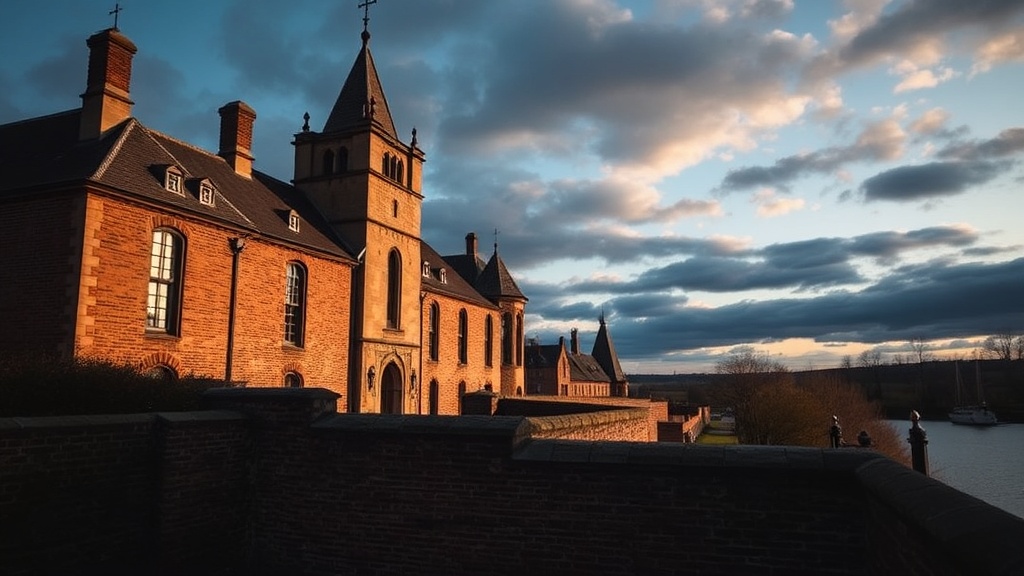
Beyond the Walls: Discovering Chambly's Rich, Unseen History

What secrets does Chambly's ancient soil hold, beyond the well-trodden paths?
Did you know the iconic Fort Chambly, which stands majestically today, is actually the fourth iteration of a fortification built on that very site? Its predecessors, made of wood, bore witness to centuries of strategic importance long before the sturdy stone structure we admire. This fact alone hints at a depth of history in Chambly that extends far beyond the fort's imposing walls, weaving through our streets, along our waterways, and into the very fabric of our community. This guide invites you to explore those deeper layers—the captivating narratives and often-overlooked locales that reveal Chambly's profound historical significance, far from the typical tourist routes.
Chambly, often celebrated for its picturesque canal and the impressive Fort Chambly, holds centuries of stories etched into its landscape. It was a pivotal cornerstone of the “Vallée-des-Forts” (Valley of Forts), a vital defensive line established by the French in the 17th century. This chain of fortifications—including Fort Richelieu, Fort Sainte-Thérèse, Fort Saint-Jean, and Fort Sainte-Anne (now in Vermont)—was designed to safeguard Montreal from various threats, from Iroquois incursions to later British advancements. Our town wasn't just a place; it was a strategic gateway, a defensive linchpin that shaped early North American history. Understanding this broader context allows us to appreciate Chambly not as an isolated historical site, but as a critical node in a larger network of defense and trade.
Take a moment to consider the Richelieu River itself. For centuries, it served as a primary artery for indigenous peoples and later for European explorers and settlers. This natural highway made Chambly both desirable and vulnerable, leading to its repeated fortification. Each successive fort at Chambly played a role in these shifting power dynamics. The current stone fort, constructed in the classic Vauban style between 1709 and 1711, is a rare example—the only remaining French-regime stone fort of its kind in North America. It’s a testament to enduring architectural and military strategy, yet it’s just one chapter in a much longer, more complex saga.
Where can we uncover the poignant whispers of Chambly's Revolutionary War past?
While the War of 1812 often dominates discussions of Canadian military history, Chambly also played a surprisingly tragic role in the American Revolutionary War. In 1775, American forces, attempting to conquer Quebec, captured Fort Chambly. Their occupation, however, was short-lived and devastating. A massive smallpox outbreak ravaged the American troops, leading to widespread suffering and death. Hundreds of soldiers, including the commanding General John Thomas, succumbed to the disease and were buried in an unmarked cemetery near the fort. This grim episode, often overshadowed by subsequent conflicts, highlights the brutal realities of warfare in the 18th century.
Today, a monument erected by the Daughters of the American Revolution stands quietly in the vicinity of the fort, serving as a poignant reminder of this forgotten chapter. It’s a somber, yet profoundly significant, site that invites reflection on the human cost of conflict and the unforeseen challenges faced by those who fought here. Finding this monument—a task that requires a keen eye and a respect for the less-celebrated aspects of history—offers a deeper, more empathetic connection to Chambly's layered past. It forces us to look beyond narratives of victory and defeat, towards the shared humanity found in suffering.
Exploring this area, one can almost sense the echoes of a desperate time. The landscape, now peaceful and verdant, once witnessed immense hardship. It’s a powerful illustration that history isn't just about grand battles, but also about the quiet tragedies and enduring legacies of individual lives caught in monumental events. For those interested in understanding the full scope of North American conflicts, this hidden site offers invaluable perspective. It encourages us to ask: What other stories of struggle and survival are embedded in the local earth, waiting to be rediscovered by a curious mind?
Who were the local figures whose lives shaped Chambly's enduring legacy?
Chambly isn't just defined by its fortifications and waterways; it's also the birthplace and home of individuals whose impact resonated far beyond our town limits. One such titan was Charles-Michel de Salaberry, the legendary commander who led Canadian forces to a decisive victory against a numerically superior American army at the Battle of the Châteauguay during the War of 1812. His manor house, a significant local landmark, still stands, offering a tangible link to his extraordinary life. A monument dedicated to his memory further cements his place in our history, celebrating his strategic brilliance and unwavering resolve.
Visiting de Salaberry's manor provides a unique window into the life of a national hero. It’s a chance to imagine the tactical deliberations and personal sacrifices made within those very walls. His story is one of local pride and national significance, demonstrating how individuals from a small community can rise to meet the greatest challenges. He personifies the spirit of resilience and ingenuity that has long characterized the people of this region.
From the world of military valor, we turn to the realm of artistic triumph: Emma Albani. Born Marie-Louise-Emma-Cécile Lajeunesse right here in Chambly, she rose to become the first Canadian singer to achieve international operatic superstardom. Albani captivated audiences across the globe, gracing the stages of Covent Garden, the Metropolitan Opera, and performing for Queen Victoria herself. Her journey from Chambly to international acclaim is a testament to extraordinary talent and relentless dedication. While her specific birthplace might not be marked by a grand monument, her story is woven into the cultural fabric of our town, reminding us of the incredible potential nurtured within our community. You can delve into her remarkable life through resources like